Innovation Do we have leaders who build it, or who simply promote it
Different authors highlight various dimensions of empathy: perceptual, cognitive, emotional, or behavioral. According to Psychology Today, empathy is the ability to understand another person’s thoughts, feelings, and condition from their perspective, which involves imagining what it means to be in their place.
In business and leadership, this ability is fundamental, as the empathetic attitude is the core of emotional resonanceand the basis for meaningful relationships.
In the corporate world, the role of empathy was popularized by Daniel Goleman (1995), who identified it as one of the key competencies within emotional intelligence. According to Goleman, empathy is the foundation of social skillsthat enable negotiation, cooperation, conflict resolution, leadership, and effective teamwork.
The empathetic leader understands not only the emotional but also the cognitive plane of people, which influences decision-making, team motivation, and the construction of organizational trust.
Empathy can be understood as a currency of trust in business. It allows us to understand others’ reactions, anticipate their needs, and create cooperative bonds. In an increasingly complex and changing world, this skill becomes a driver for innovation, productivity, and team cohesion.

Science has developed multiple tools to measure empathy in its cognitive, emotional, and behavioral dimensions. The most commonly used include:
These tools have made it possible to demonstrate that empathy directly impacts how people make decisions, manage relationships, and face conflicts.
In the business and innovation environment, one of the most practical tools for applying empathy is the Empathy Map. This technique, created by XPLANE within Design Thinking processes, facilitates the visualization of the perceptions, motivations, and emotions of customers, employees, or collaborators.
The Empathy Map allows you to:
When creating the Empathy Map, we must start by clearly defining both the scope and purpose of the analysis. During the observation phase, we must take note of how the person communicates with us. It is essential to gather as much information as possible about the thoughts, feelings, and beliefs of our customer/user, as well as to observe and analyze non-verbal communication and body language.
The Empathy Map is a graphical representation that allows us to visualize and understand our client’s environment, their worldview, needs, and expectations.
This map is a template composed of 6 main areas and a central one (epicenter) where the person/user is placed. The idea is to complete each area with the answers we obtain from our client/user about what they:
By answering these questions, the leader or entrepreneur gains a clearer vision of people and can align organizational strategies with their real expectations.
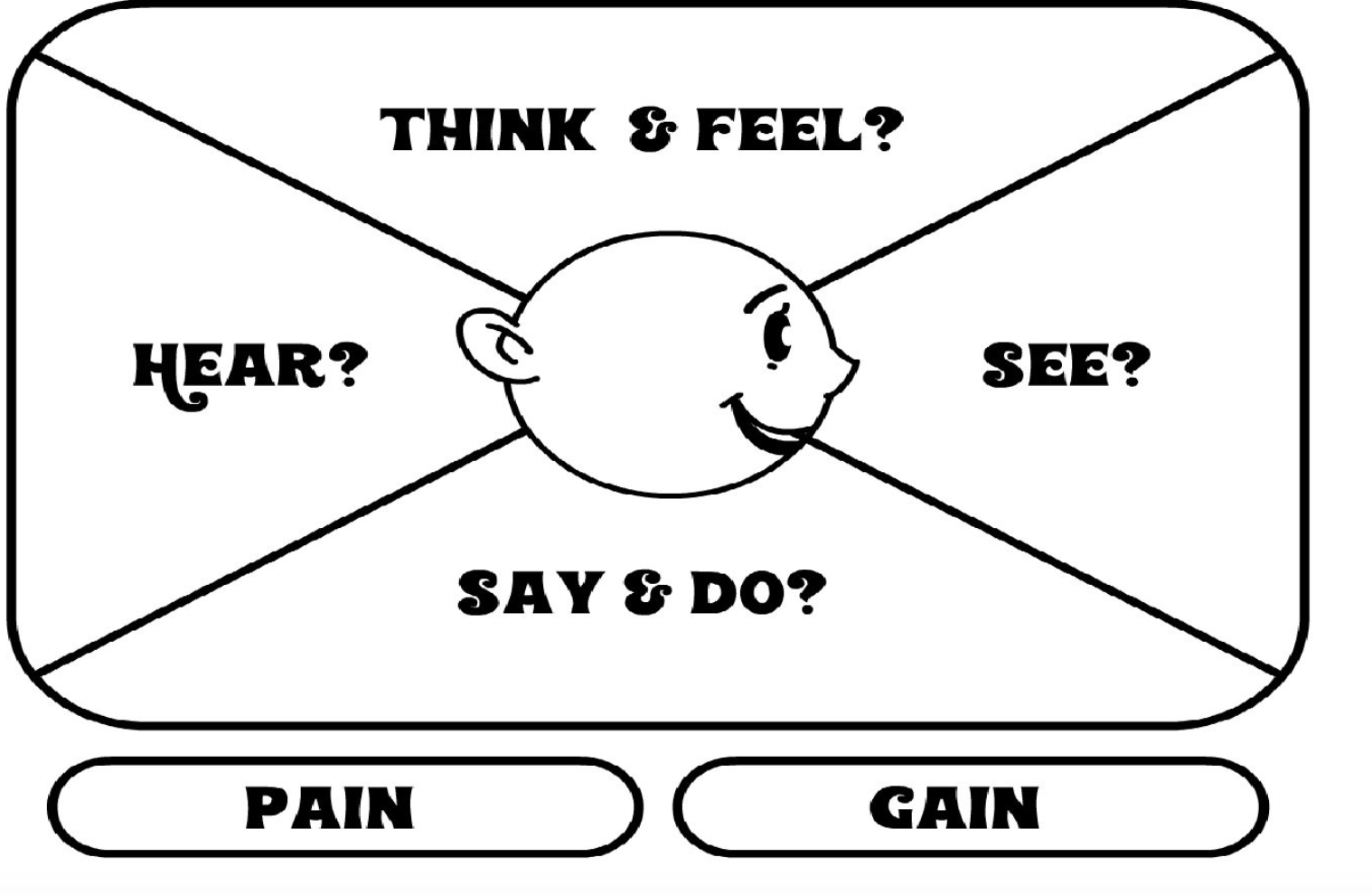
The versatility of this tool allows it to be used in multiple contexts:
In summary, the Empathy Map is a graphical representation that connects business strategy with the human perspective, fostering more collaborative and sustainable environments.
Empathy is not only a human value but a strategic skill for leading in changing and highly competitive environments. Its integration into management allows us to anticipate needs, strengthen relationships, and design solutions aligned with people.
At Euro Business Coach, we support leaders and organizations in implementing tools such as the Empathy Map to enhance innovation, engagement, and sustainable results.
📩 Connect with us and schedule your free session to discover how to apply empathy in your company.